Many Nigerian renters prepare financially for rent but remain unprepared for the fees that follow. What appears to be a manageable yearly rent often transforms into a financial burden once transaction charges are introduced.
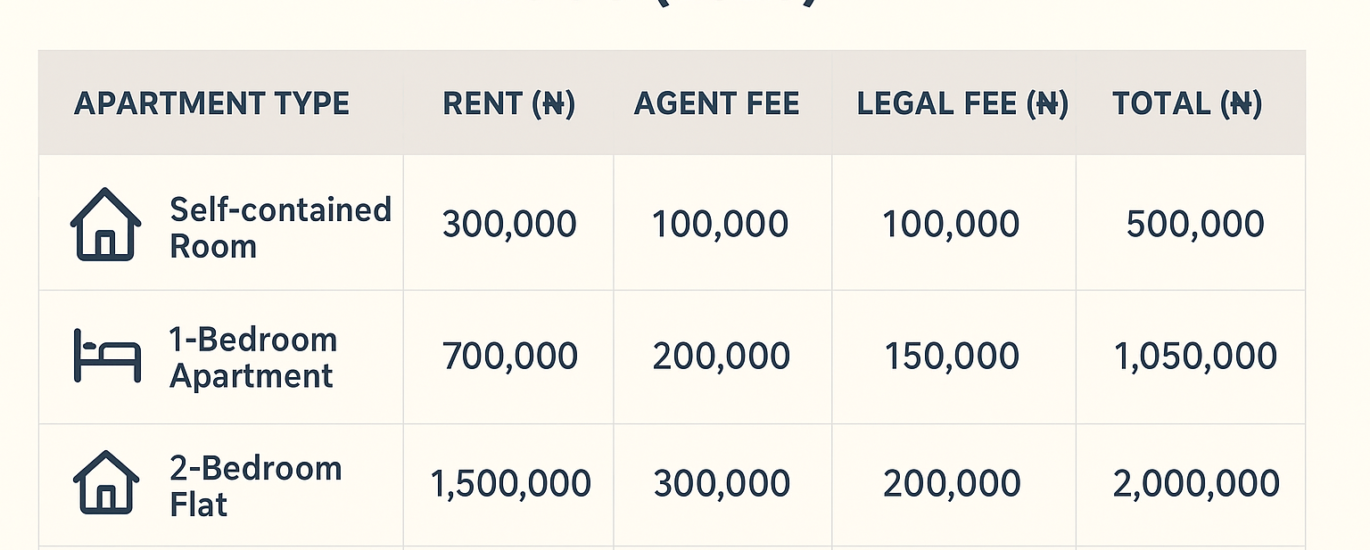
The typical renting journey involves several payments that are rarely visible at first contact. Agent commission, agreement documentation, legal preparation, caution deposit, inspection charges and miscellaneous facilitation costs accumulate quickly. In some cases, these fees equal or exceed the rent itself.
Because these charges are dispersed across different actors, renters rarely question them collectively. Each payment appears isolated, yet together they form a heavy financial load that distorts housing affordability.
This fee layering has gradually become accepted as normal. However, it does not reflect structured or regulated property markets elsewhere. In more organized systems, the majority of renter cost corresponds directly to the property itself, not the process around it.
Hidden fees create several problems. They discourage mobility, prevent families from upgrading housing, and push renters toward unsafe informal arrangements simply to avoid excessive upfront costs. They also reduce trust in the rental market, as renters feel uncertain about total expenses until late in the process.
A transparent housing environment requires that renters clearly understand what they are paying for and why.
Crest App addresses this by simplifying the transaction structure. Properties are listed by verified owners or authorized representatives within a controlled environment. Fee visibility is improved, and unnecessary duplication across multiple intermediaries is reduced.
When renters interact within a platform that prioritizes verification and structured processes, cost clarity improves and excess charges decline.
Housing affordability is not only about rent price. It is about removing hidden inflation within the transaction itself. Crest App moves Nigerian renting toward that clarity.